
Guide LXVII — National Guide — Japan
Luxury Travel in Japan: Ryokan, Ryotei and the Art of the Considered Trip
Japan does luxury differently: restraint over display, service as a craft, and experiences money alone doesn't book. Where to go, what it costs, and how the country's top end actually works.
Book a stay in Japan
Set your dates to open live rates with our booking partners for this destination.
Partner rates are indicative and confirmed at checkout. Some links are affiliate links.
How Japan does luxury
Japanese luxury inverts the Western template. The most expensive room in the country may be a tatami suite with a cypress bath and dinner served kneeling; the most sought-after restaurant seats eight people behind an unmarked door. Display is replaced by craft, and the currency that matters is access — the ryokan that books a year out, the counter that takes referrals only.
That makes Japan a destination where planning is the luxury product. The practical tiers are simple: top city hotels in Tokyo and Kyoto run USD 1,000 to 2,500 a night; the great ryokan — Gora Kadan, Tawaraya and their peers — run USD 1,500 to 5,000 with dinner and breakfast included; and private-use experiences, from temple openings to geisha district walks with a licensed guide, are arranged per request.
Where to go
Tokyo
The world's most Michelin-starred city, palace-view suites, and neighbourhoods from Ginza's flagships to the back-street counters of Kagurazaka. Three nights minimum; the city rewards the unhurried.
Kyoto
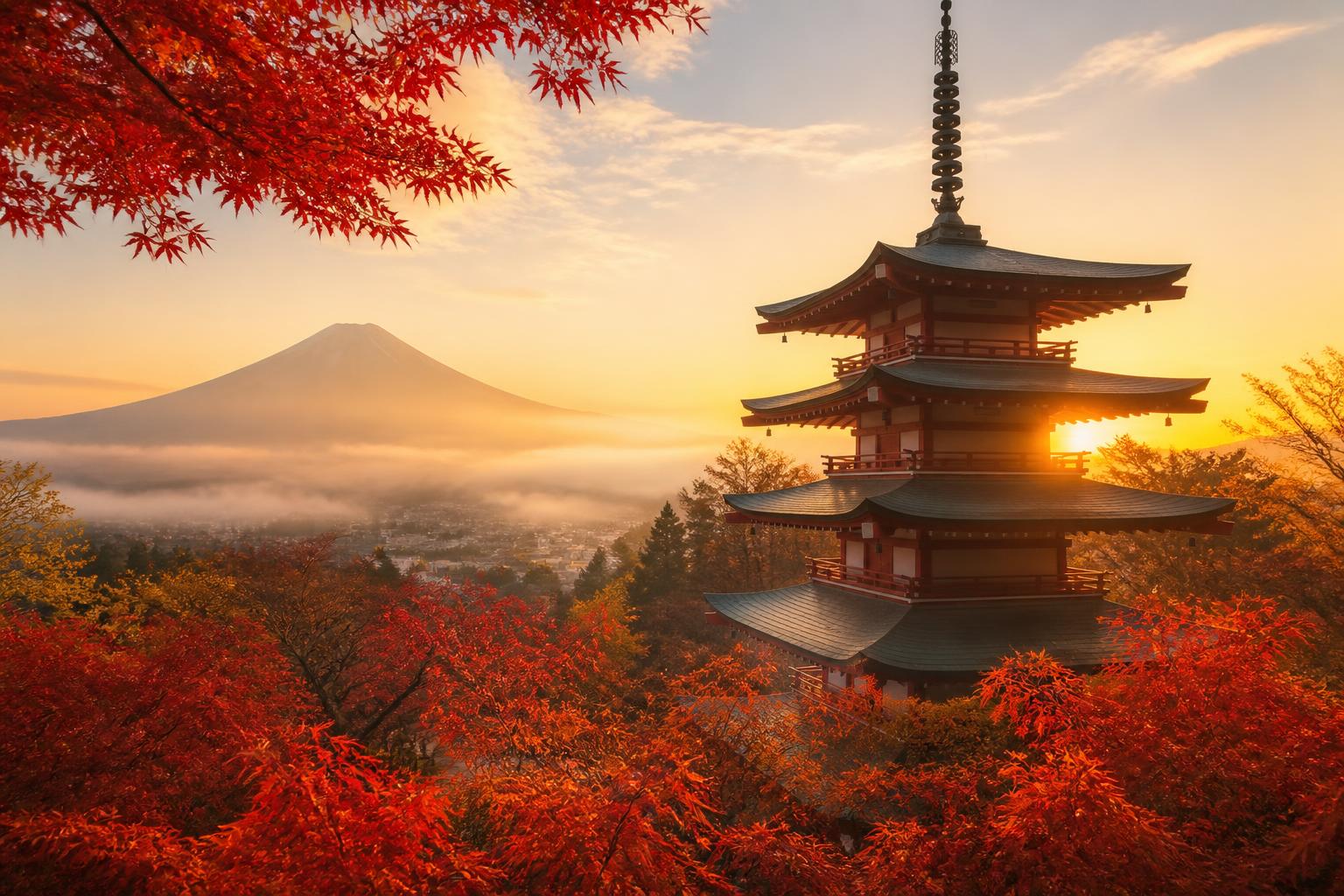
The cultural heart: temple gardens at dawn before the gates open, kaiseki in Gion, machiya townhouses and the great ryokan. The November maples are the country's hardest reservation.
Hakone and the onsen country
Ninety minutes from Tokyo: open-air hot-spring baths in the mountains, views of Fuji, and the classic two-night ryokan interlude between the cities.
Hokkaido
Winter powder that skiers rank above the Alps, summer lavender fields and seafood — Japan's wilderness, done in comfort.
Naoshima and the Setouchi islands
Art islands in the Inland Sea: Tadao Ando museums, a hotel inside one, and the quietest luxury Japan offers.
- Book peak-season ryokan and top counters six to twelve months out; many release rooms on fixed dates.
- The top restaurants take reservations one to two months ahead, often through your hotel concierge — use it.
- Luggage-forwarding services move bags city to city for about USD 20 a piece; travel light on the trains.
- Cash still matters at smaller establishments despite rapid card adoption.
- A private guide for one day in Kyoto transforms the city; licensed guides book out in peak weeks.
What a week costs
A considered ten-day Japan trip at the top end — Tokyo, Hakone, Kyoto, one further region — runs roughly USD 15,000 to 30,000 for two, before flights: suites and ryokan at USD 1,200 to 3,000 a night, kaiseki dinners at USD 200 to 400 a head, private guiding and transfers alongside. It can be done for half that with smart shoulder-season timing, and for considerably more if the bullet-train green car becomes a private jet.
The value observation regulars make: Japan's top end is priced below the equivalent in Paris or the Maldives, while the service standard is arguably higher. The yen's long softness has only widened the gap.
Frequently asked questions
- How much does a luxury trip to Japan cost?
- Indicatively USD 15,000 to 30,000 for two over ten days at the top end — suites and ryokan from USD 1,200 a night, kaiseki dining, private guides and transfers — before international flights. Shoulder seasons bring it down markedly.
- What is a ryokan and is it worth it?
- A traditional inn with tatami rooms, multi-course kaiseki dinner and hot-spring baths, often with private onsen. It is the single most distinctive luxury experience Japan offers; one or two nights is the classic dose.
- How many days do I need in Japan?
- Ten days is the sweet spot for a first trip — Tokyo, a mountain onsen interlude, Kyoto and one further region. A week works if you accept Tokyo and Kyoto only.
- Do I need to tip in Japan?
- No — tipping is not part of Japanese culture and can cause confusion. Service is built into the price, and the finest expression of thanks is a sincere thank-you.
- Is Japan good for a honeymoon?
- Exceptionally — ryokan with private open-air baths, temples at dawn, world-class dining and flawless service. The November maples and April blossom weeks are the classic honeymoon windows.
Editorial note & limitations
Seasonal conditions and rate context are indicative planning figures assembled from official tourism data and prime-market research in September 2026. iLuxuryTravels does not yet hold live inventory in Japan; this guide is editorial and will connect to the Collection as houses join.