
Guide LXVI — Seasonal — Japan
The Best Time to Visit Japan: A Season-by-Season Answer
Cherry blossom, autumn maples, powder snow or empty temples — Japan rewards every season differently. When to go for what, and the weeks the connoisseurs actually book.
At a glance
- late March–April, mid-November
- Best overall Source
- late March to mid-April, moving north
- Cherry blossom Source
- mid-October to early December
- Autumn colour Source
- June to mid-July
- Rainy season Source
- August to October, peaking September
- Typhoon risk Source
- 6–12 months for blossom and autumn peak
- Booking window Source
Book a stay in Japan
Set your dates to open live rates with our booking partners for this destination.
Partner rates are indicative and confirmed at checkout. Some links are affiliate links.
The short answer
Japan has no bad season, only different countries wearing the same name. Spring (late March to May) and autumn (mid-October to early December) offer the mild weather and the two great spectacles — blossom and maple — that book out the best rooms a year ahead. Winter brings empty temples, snow monkeys and the world's deepest powder in Hokkaido. Even summer, hot and humid as it is, delivers festivals, alpine hiking and the north at its best.
The one stretch to plan around, rather than avoid, is the rainy season — tsuyu — from early June to mid-July, followed by the typhoon months of August to October. Neither stops a trip; both reward flexible bookings and a loose itinerary.
Month by month
The blossom front moves predictably north from late March; the maples reverse the journey from October. The table is the planning spine — rates at the top hotels and ryokan follow the crowds almost exactly.
| Months | What it's like | Crowds | Booking character |
|---|---|---|---|
| Jan – Feb | Cold, clear, snow in the north; empty cultural sights | Low except ski resorts | Best value of the year; short notice works |
| Late Mar – Apr | Cherry blossom sweeps north; mild days | The year's peak | Book 9–12 months out; rates at maximum |
| May | Fresh green, warm, golden light after Golden Week | High early month, easing | The connoisseur's spring window |
| Jun – mid-Jul | Rainy season: soft rain, few crowds, hydrangeas | Low | Value window; flexible plans rewarded |
| Mid-Jul – Aug | Hot and humid; festivals and alpine season | High domestic, moderate foreign | Go north or go uphill |
| Sep – Oct | Typhoon risk early, then cooling and clearing | Moderate | Flexible rates; October is superb late month |
| Nov – early Dec | Autumn maples, crisp air, peak colour | Second peak of the year | Book 6–9 months out for Kyoto |
| Mid-Dec | Quiet, cold, illuminations and onsen weather | Low | The sleeper window before ski season |
The two great windows, honestly
Cherry blossom (late March – mid-April)
As beautiful as advertised and as crowded. The blossom lasts about a week per city and moves with the weather; build the trip around a region rather than a date, and hold dinner and ryokan reservations months ahead.
Autumn maples (mid-November)
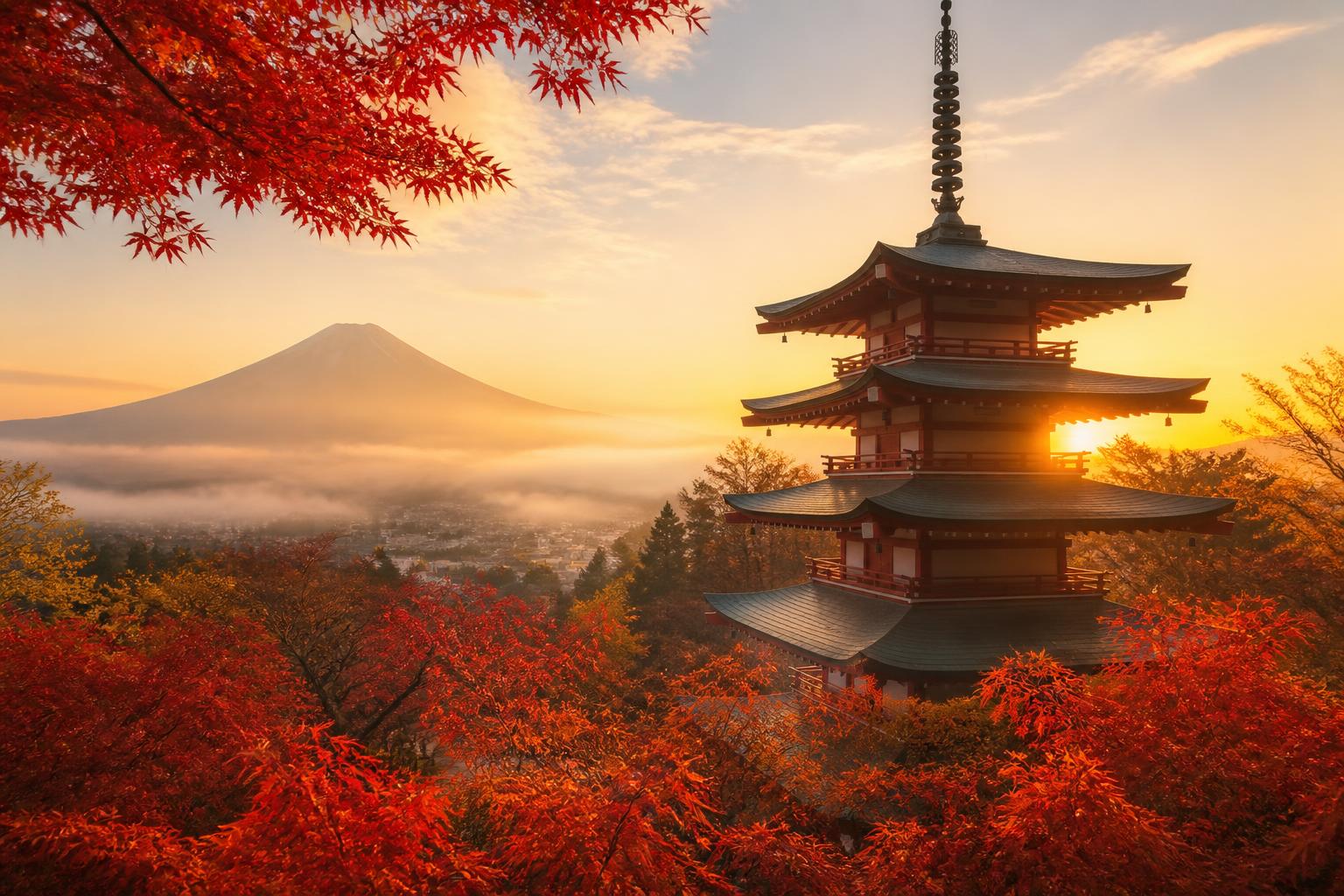
Many regulars prefer it: the colour lasts longer than the blossom, the light is lower and kinder, and Kyoto's temples against red maple are the country's most photographed weeks. Book Kyoto six to nine months out.
The quiet alternative
Late May and early June, after Golden Week and before the rains, offers green Japan at shoulder rates — the window experienced travellers increasingly take instead.
Winter (December – February)
The underrated season: crisp blue days in the cities, snow monkeys in Nagano, open-air onsen in falling snow, and Hokkaido powder that skiers cross the world for.
- Book blossom and November Kyoto travel six to twelve months ahead; the best rooms go first.
- Golden Week (late April–early May) and Obon (mid-August) are domestic travel peaks — avoid or embrace knowingly.
- Typhoon season (August–October) rarely cancels a trip but can pause transport for a day; keep bookings flexible.
- The Japan Rail Pass rules change periodically — check current prices against point-to-point tickets before buying.
- Winter is the value play: top hotels at half their April rates, with the sights to yourself.
Frequently asked questions
- When is the best time to visit Japan?
- Late March to April for cherry blossom and mid-November for autumn colour are the two great windows. For fewer crowds at lower rates, late May, June and the winter months are the connoisseur's alternatives.
- When is cherry blossom season in Japan?
- The blossom front opens in Tokyo and Kyoto in late March to early April and moves north through April, reaching Hokkaido in early May. Peak bloom lasts about a week per city and shifts with the weather each year.
- When is the rainy season in Japan?
- Tsuyu runs from early June to mid-July in most of the country. It rarely rains all day; crowds thin and rates drop, making it a genuine value window for flexible travellers.
- When is typhoon season in Japan?
- Typhoons can affect Japan from July to October, peaking in August and September. They are forecast days ahead and usually mean a day of paused transport rather than a ruined trip.
- Is Japan worth visiting in winter?
- Yes — crisp clear days, empty temples, snow monkeys, open-air hot springs in the snow and some of the world's best powder skiing in Hokkaido. It is also the year's best value window at top hotels.
- How far ahead should I book Japan?
- Six to twelve months for cherry-blossom weeks and November in Kyoto; three to six months otherwise. The most sought-after ryokan and restaurants hold the longest lead times in the country.
Editorial note & limitations
Seasonal conditions and rate context are indicative planning figures assembled from official tourism data and prime-market research in September 2026. iLuxuryTravels does not yet hold live inventory in Japan; this guide is editorial and will connect to the Collection as houses join.