Guide CVIII — Japan — Month by month
Japan in June: Weather and Where to Stay
Tsuyu — the rainy season. Hydrangeas, quiet temples and afternoons that clear more often than the forecast suggests.
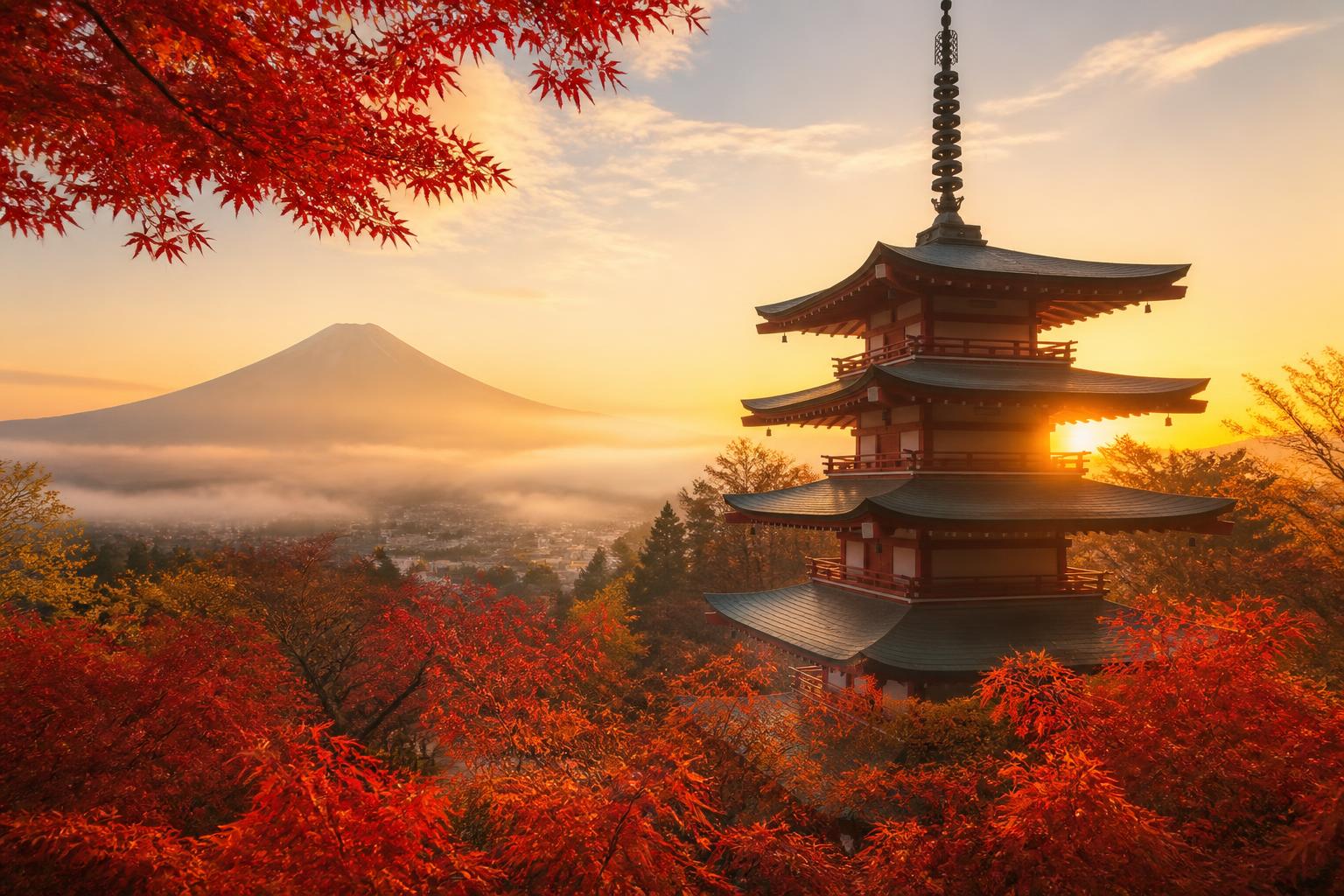
Photo: Illustrative image of a pagoda and Mount Fuji framed by autumn maples; not a seasonal weather photograph.
TL;DR — the short version
In brief
Japan in June: the rainy season explained, where it barely rains, hydrangea gardens and quiet Kyoto.
Is June a bad time to visit Japan?
It is the wettest month on Honshu, but rain comes in bursts rather than all day. In exchange you get quieter temples and luminous gardens.
Typical price band
Trip planning guide
Indicative only. Our booking partners confirm live rates and availability for your exact dates.
Book a stay in Japan
Choose dates for partner searches. Villa prices below are recorded samples; multiplying them by your selected nights is an estimate, not an exact-date quote.
Hotels and other rentals
Partner rates are indicative and confirmed at checkout. Some links are affiliate links.
The short answer
The rainy season is not a monsoon. It is grey mornings, heavy bursts and long clear spells, and it turns Kyoto's moss gardens luminous while tourist numbers fall. Rates fall accordingly: June and February are months when sought-after villas are more often obtainable — compare live availability.
Hokkaido is the exception that makes June easy to plan. The island sits outside tsuyu almost entirely — dry, cool and green, with lavender season opening at the end of the month.
Where to be in June
Hokkaido
Outside the rainy season: dry, mild, green, and typically slower before summer.
Kyoto
Hydrangeas, wet moss and quieter temples. The photographic month, if you carry an umbrella.
Hakone
Rain suits an onsen valley better than it suits a city — this is the month the ryokan are in shoulder season.
- Tsuyu reaches Honshu in early to mid-June and lasts around six weeks; Hokkaido is largely exempt.
- Book indoor-anchored days: kaiseki, museums, tea houses, onsen.
- Rates and availability tend to be favourable outside Hokkaido — compare live partner rates.
- Humidity climbs through the month — pack for warm damp rather than cold.
What to book, and when
Weather
- Answer
- Warm and humid; tsuyu rains from early to mid-June on Honshu
Booking window
- Answer
- Check live availability.
Verdict
- Answer
- A quiet, distinctive month if you accept the rain
| Question | Answer |
|---|---|
| Weather | Warm and humid; tsuyu rains from early to mid-June on Honshu |
| Booking window | Check live availability. |
| Verdict | A quiet, distinctive month if you accept the rain |
Houses and rentals for this month:
Frequently asked questions
- Is June a bad time to visit Japan?
- It is the wettest month on Honshu, but rain comes in bursts rather than all day. In exchange you get quieter temples and luminous gardens.
- Where in Japan does it not rain in June?
- Hokkaido sits outside the rainy season almost entirely — dry, cool and green, with lavender opening at the end of the month.
- How much does it rain in Japan in June?
- The rainy season normally runs from about 6–7 June to about 19 July on Honshu, so expect frequent rain with drier spells in between.
Editorial note & limitations
Weather patterns are drawn from Japan Meteorological Agency climate normals and Japan National Tourism Organization seasonal guidance, reviewed September 2026. Rates vary by property and date; compare live partner rates.