
Journal
The Alpine Wardrobe: What You Actually Wear Off the Mountain
Ski kit takes care of the daylight hours. The other eight hours of an alpine day are where most chalet wardrobes go wrong.
Skiers pack for skiing. They arrive with technical layers for every condition and then spend four hours a day on the snow and eight in a village that has nothing to do with sport.
The off-mountain half of an alpine week is warm rooms and cold streets, ten metres apart. That argues for layers that can be shed indoors rather than one heavy coat: a fine knit, a heavier one over it, and a shell or shearling for the walk. Chalets run hot, and a thick sweater worn all evening beside a fire is a mistake you make once.
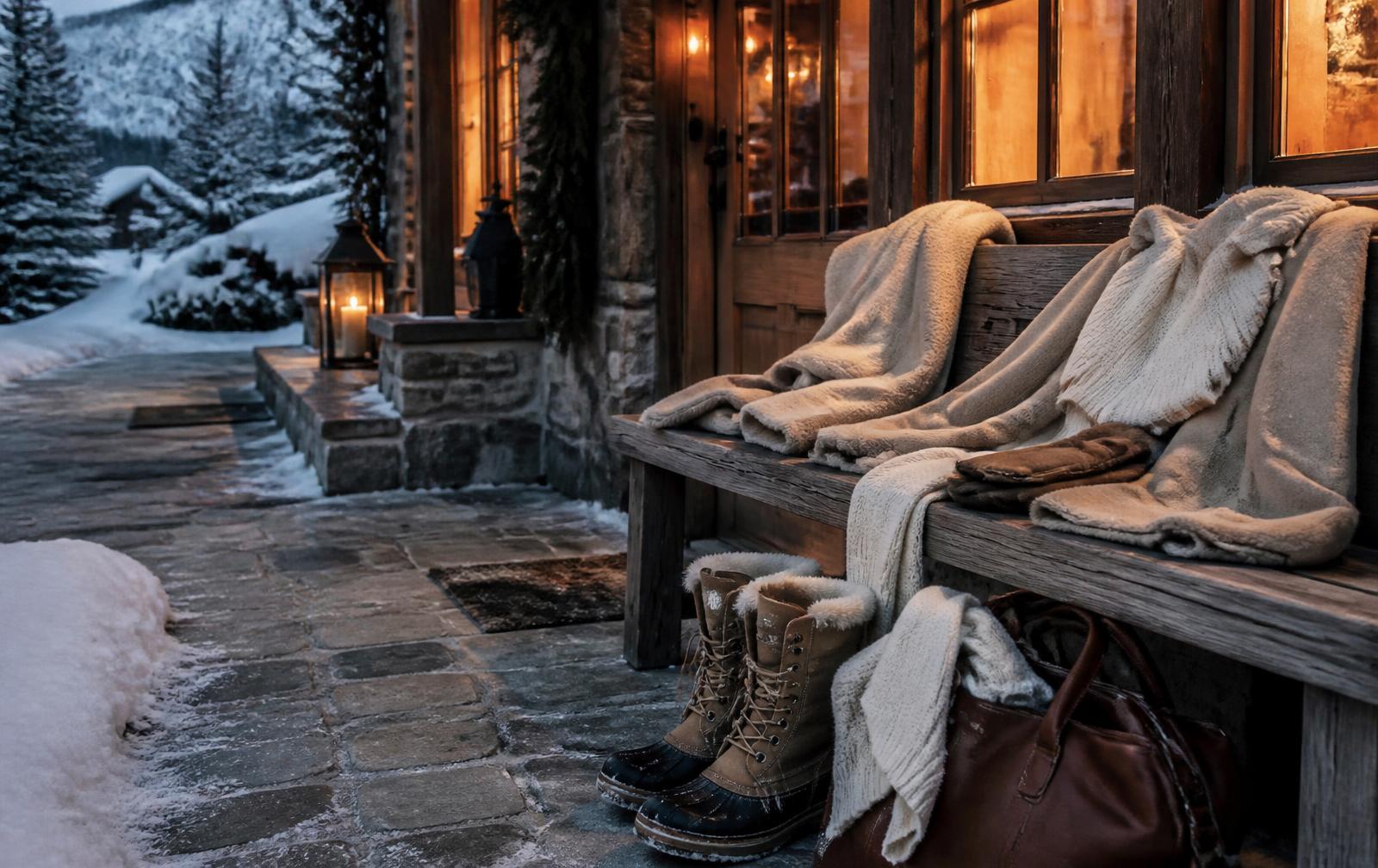
Footwear decides the week. One pair of boots with real grip for the village, because resort streets ice over after dark and polished soles are a genuine hazard on a slope down to a restaurant. Something soft and unstructured for inside the house, since most chalets ask for outdoor boots to come off at the door.
Lunch on the mountain is its own dress problem. Terrace restaurants sit in strong sun at altitude, and people who dressed for the lift queue overheat within minutes. A base layer worth sitting in, sunglasses that stay on when the goggles come off, and lip protection with a high factor solve most of it.
Evenings in Courchevel 1850, St Moritz and Aspen are dressier than the mountain suggests — closer to a city dinner than a ski holiday. Val d'Isere, Meribel and Jackson Hole are more relaxed, and a good knit carries the evening. Nowhere in the Alps requires black tie unless a specific invitation says so.
Two practical notes that outlast any of this. Boot bags go in the cabin if the connection is tight, because ski boots are the one item a rental shop cannot match to your feet in an hour. And whatever you wear at altitude, the sun is stronger than it feels at minus five.